


Important information:
Am 10. April 2024 wurden das Kundenportal sowie der Web-Zugriff auf das Kartenkonto eingestellt. Bitte laden Sie die Swiss Bankers App herunter, um weiterhin uneingeschränkten Zugriff auf alle Dienste zu haben.
Are you a Swiss Bankers sales partner?
Hier geht es zum Partnerportal.
Here you will find important tips and useful information for Uzbekistan.
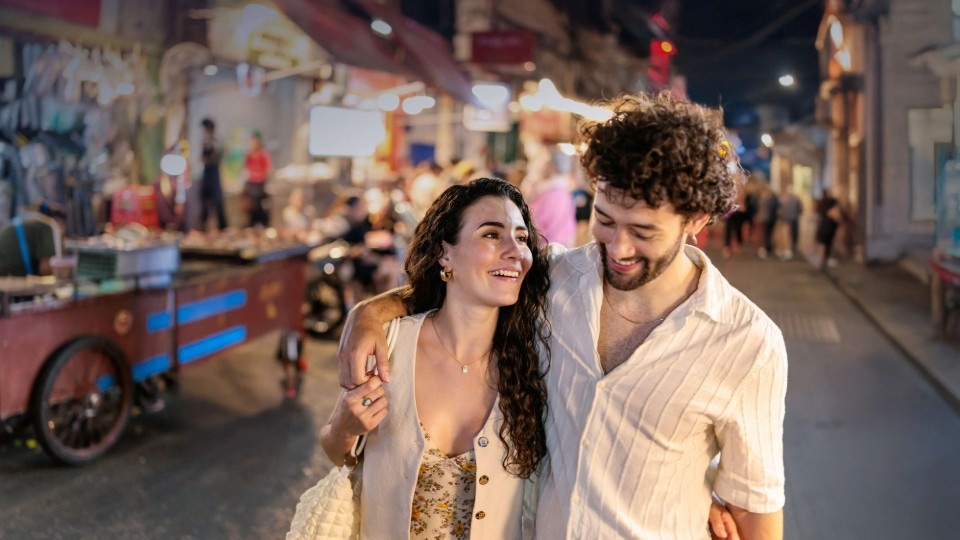
Outside larger towns and cities, access to cash via ATMs is not always available.
Prepaid credit cards and credit cards are accepted occasionally in larger hotels and restaurants.
Keep exchange and conversion receipts for reconverting the local currency.
Only exchange money at official providers such as banks and bureaux de change.
We recommend carrying cash in US dollars (USD).
 Time difference from Switzerland
+ 4 h / + 3 h during our daylight saving time
 Capital
Taškent (Tashkent)
 National language
Uzbek
 Voltage
 Opening hours
Banks
9.00 am - 6.00 pm (Mon - Fri)
Lunch break from 1.00 pm to 2.00 pm
Shops
8.00 am - 9.00 pm (Mon - Sun)
 Public holidays
 Entry requirements
The following documents are required to enter Uzbekistan:
Minors: A travel authorisation is recommended for minors travelling alone, with only one parent or without their parents.
As of: November 2024
 Climate
Despite its relatively compact size, Uzbekistan has several different climate zones due to its geographical diversity:
Best time to travel to Uzbekistan:
City sightseeing: Spring (April to June): ideal temperatures for visiting historic cities such as Samarkand, Bukhara and Khiva. Autumn (September to October): pleasant weather for sightseeing and exploring, without the extreme heat of summer.
Hiking and nature: Spring and early summer (April to June): ideal conditions for hiking in the mountains, as nature is in full bloom at this time. Autumn (September to October): an ideal time for hiking through colourful landscapes in pleasant temperatures.
Winter sports: Winter (December to February): good conditions for winter sports such as skiing and snowboarding, particularly in the higher mountain regions, which are snow-covered at this time of year.
 Communications
Tourist attractions
Registan Square, Samarkand - An impressive ensemble of three madrasahs (Islamic schools), considered one of the finest examples of Islamic architecture.
Itchan-Kala, Khiva - The inner city (Itchan-Kala) features well-preserved mosques, madrasahs and residential buildings that offer a vivid impression of historic Khiva.
Old Town of Bukhara - This UNESCO World Heritage Site includes numerous mosques, madrasahs and the famous Kalon Minaret.
Shah-i-Zinda, Samarkand - An impressive complex of mausoleums and other religious buildings, renowned for its spectacular tilework.
Gur-e-Amir Mausoleum, Samarkand - The burial place of Timur (Tamerlane), one of Central Asia’s most powerful conquerors.
Ark Fortress, Bukhara - A massive fortress that historically served as the citadel of Bukhara.
Kalyan Minaret, Bukhara - Also known as the “Tower of Death”, it is a striking example of Islamic architecture.
Ulugh Beg Observatory, Samarkand - A historic observatory built by Ulugh Beg, an astronomer and mathematician as well as a grandson of Timur.
Lyabi-Hauz Ensemble, Bukhara - A picturesque square surrounded by historic buildings and a large pool, and a popular meeting place in the city.
Aydarkul Lake - A large artificial lake in the Kyzylkum Desert, popular with anglers and nature lovers.
Nurota Mountains - This picturesque mountain region is known for its spectacular landscapes and rich wildlife, including the rare Severtzov sheep.
Mohammed Amin Khan Madrasah, Khiva - The largest madrasah in Khiva, now used as a hotel.
Khudayar Khan Palace, Kokand - A magnificent palace that once served as the centre of the Kokand Khanate.
 Food and drink
Uzbek cuisine is characterised by rich flavours and a wide variety of traditional dishes that reflect deep cultural roots and influences from neighbouring Central Asian countries. Uzbek food is known for its hearty and aromatic dishes, which are often enjoyed in a convivial setting.
 Etiquette tips
Dining etiquette: During meals, it is common to eat together from a large shared dish, especially when enjoying traditional dishes such as pilaf. Refusing food may be considered impolite, so it is courteous to try at least a little of everything.
 Health situation
It is advisable to avoid tap water and drink bottled or filtered water instead in order to reduce health risks.
Medical care
Medical care in Uzbekistan is steadily improving but remains below Western standards. Even in major cities such as Tashkent and Samarkand, medical facilities often do not meet modern standards. Both public and private clinics are available, with private facilities generally better equipped and more likely to have English-speaking staff. In many rural parts of the country, access to medical care is very limited, and emergency services are often neither sufficiently reliable nor fast.
It is strongly recommended to take out comprehensive travel health insurance before travelling, including cover for emergency repatriation.
It is advisable to bring all necessary medication in sufficient quantities, as it may not be available everywhere. Medicines must be listed precisely on the customs declaration. Undeclared medication may be regarded as drugs in Uzbekistan and can lead to laboratory testing, delays and substantial penalties.
 Current security situation
Further information on the current security situation can be found on the website of the Federal Department of Foreign Affairs (FDFA).
As of: November 2024
 Road traffic
 Public transport
 Air traffic
There are no direct flights from Switzerland to Uzbekistan, but connections with stopovers are available. The leading airline is Uzbekistan Airways, complemented by other international carriers such as Turkish Airlines and Aeroflot.
 Dialling code for calling Switzerland
8 (wait for the tone) 10 41 (omit the zero from the Swiss area code)
 Emergency numbers
 Swiss Embassy / Consulate
Shota Rustaveli, Impass1, House 4,
100070 Tashkent
Tel.: +998 78 120 54 54
Email: tashkent@eda.admin.ch
 Other information
Travel is the secure prepaid card for use away from home – without any annual fees. In the event of loss, the card including the balance will be replaced worldwide.
Find out more about TravelWhile every precaution has been taken to verify the information provided, Swiss Bankers Prepaid Services Ltd does not guarantee the accuracy or completeness of Country Information. Swiss Bankers therefore shall not be held liable for any damage or loss sustained in connection with any errors or omissions contained therein.

© Swiss Bankers 2026


