


Important information:
Am 10. April 2024 wurden das Kundenportal sowie der Web-Zugriff auf das Kartenkonto eingestellt. Bitte laden Sie die Swiss Bankers App herunter, um weiterhin uneingeschränkten Zugriff auf alle Dienste zu haben.
Are you a Swiss Bankers sales partner?
Hier geht es zum Partnerportal.
Trieste – where Italy meets Central Europe and the sea is within easy reach. Amidst Venetian elegance, Austrian coffee-house culture and sweeping views of the Adriatic, a city unfolds that is brimming with stories, moments of pleasure and a relaxed way of life – ideal for exploring the finest sights and discovering charming hidden gems.
 14.08.2025
 Eliza
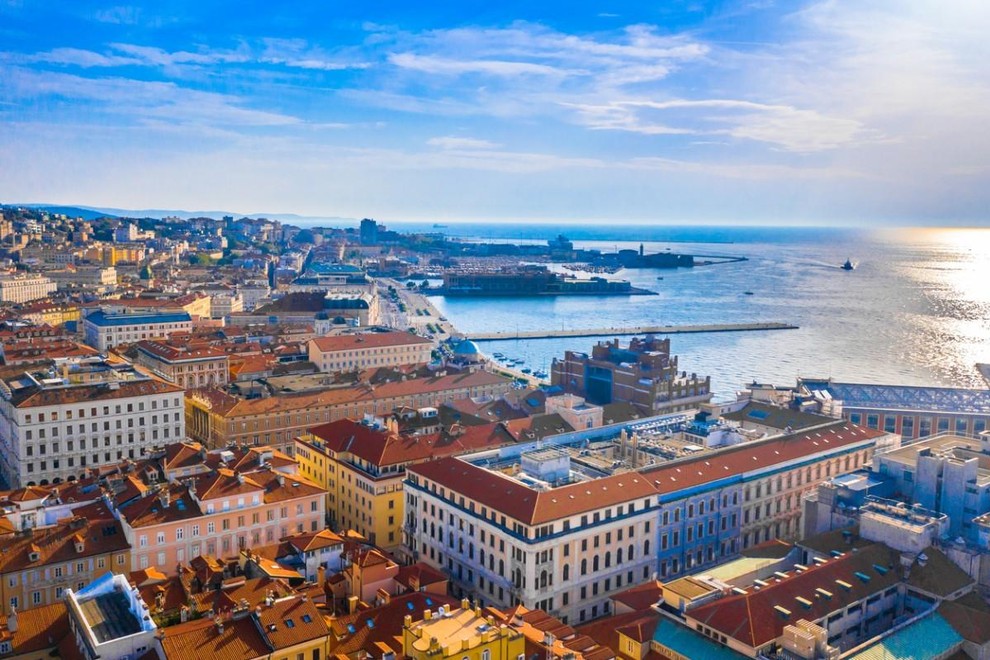

Photo: A view of Trieste’s sunny coastline on a clear spring’s day; the sea glistens and walkers are enjoying the mild weather.
Situated in the far north-east of Italy, Trieste is a delight all year round, but the city is at its most beautiful in spring and autumn. In spring, the city comes to life, the cafés fill up, and temperatures are a pleasant 18 to 24 degrees. On autumn days, a soft light envelops the city, making Trieste’s architecture glow in warm colours. In summer, the coast transforms into a relaxed seaside resort – the Barcola Promenade, in particular, is a popular meeting place at this time of year. The long, warm evenings also invite you to dine al fresco and enjoy Piazza Unità d’Italia. Winter is surprisingly mild, and it is precisely then that Trieste feels particularly authentic: no crowds, time for museum visits, cosy hours in coffee houses and walks by the sea. Every attraction can be explored at your leisure – whether cultural, historical or maritime. If you’d like to experience special events, you should plan a visit in October for the Barcolana regatta or during Advent for the Christmas markets in the old town.

Photo: The white Miramare Castle stands majestically on a cliff overlooking the Adriatic Sea, surrounded by a lush park filled with exotic plants.
The heart of Trieste beats in Piazza Unità d’Italia, one of the largest squares in Europe, which borders directly on the sea and offers sweeping views across the northern Adriatic. Surrounded by magnificent palaces from the Habsburg era, it is a prime example of the blend of Italian and Central European flair. The best way to enjoy the square is over an espresso at the Café degli Specchi, which has been welcoming guests from all over the world since the 19th century. Another highlight is Miramare Castle, which stands perched high on a cliff and is surrounded by extensive grounds. It was built in the 19th century by Archduke Ferdinand Maximilian for his wife Charlotte and captivates visitors with its sumptuous rooms and exotic plants. Not to be forgotten is the Teatro Romano, a Roman amphitheatre dating from the 1st century AD, which lies right in the city centre and demonstrates just how far back Trieste’s history stretches. Anyone strolling through the city will also come across magnificent churches, Art Nouveau façades and small squares that invite you to linger – each one a sight in its own right that underlines the city’s charm.

Photo: If you go for a swim at Barcola early in the morning, you’ll experience the city just like a local: quiet, peaceful and with a sweeping view of the open sea.
As well as its famous sights, Trieste has many charming corners that often go unnoticed in the shadow of the major attractions. If you want to experience the city like a local, don’t miss these special spots:
The Canal Grande at dusk: Not just a photo opportunity, but a magical place when the warm lights from the houses dance on the water and cafés beckon you in for an aperitivo.
Libreria Antiquaria Umberto Saba: A tiny second-hand bookshop crammed with books, where you can browse amongst the old shelves and get a feel for a piece of Trieste’s literary history.
The Karst village of Prosecco: Quietly situated with views of vineyards and the sea, ideal for a glass of the sparkling wine that gives the village its name in a relaxed atmosphere.
A morning swim at Barcola: Early risers can enjoy the sunrise over the Adriatic here and start the day just like the Triestini.
Seasonal osmize: Farmhouses that open their doors for a limited time, serving wine, prosciutto, olives and other specialities under vine-covered arbours.
Visitors to these places will discover the authentic Trieste – relaxed, charming and far removed from the large tourist crowds.

Photo: The Rilke Walking Trail winds its way along the cliffs near Duino, offering sweeping views across the deep-blue sea, framed by lush Mediterranean vegetation.
Trieste is ideal for travellers who enjoy combining culture with nature. The Karst region behind the city is a paradise for walkers and cyclists. Amidst rugged cliffs, forests and vineyards, paths lead to vantage points offering sweeping views across the Adriatic Sea. Particularly popular is the Rilke Trail near Duino – named after the poet Rainer Maria Rilke, who stayed here and was inspired by this coastal landscape to write his ‘Duino Elegies’. The easily accessible trail rewards walkers with spectacular sea views and romantic sunsets. Art and architecture lovers should visit the Museo Revoltella – a combination of an elegant city palace and a modern art gallery with views across the harbour. For an outing with a maritime flavour, a boat trip to nearby Muggia is highly recommended. This small fishing town charms visitors with its Venetian architecture, narrow alleyways and cosy cafés, where you can round off the day with a glass of wine.

Photo: Trieste is a culinary melting pot. Italian classics such as pasta and risotto feature on the menu here, alongside Austrian pastries and Balkan specialities.
Trieste is a culinary melting pot. Italian classics such as pasta and risotto feature on the menu here, alongside Austrian pastries and Balkan specialities. A must-try is jota, a hearty bean soup with sauerkraut, which tastes particularly good on cooler days. Fresh fish, brought straight from the boats to the market on the Riva Nazario Sauro, brings a touch of the Mediterranean to your plate. Meat-lovers will be in their element at the historic Buffet da Pepi, where hearty dishes have been served since 1897 – now complemented by lighter vegetable options. Coffee lovers mustn’t miss Caffè San Marco, an Art Nouveau café with a literary past, once frequented by authors such as James Joyce and Italo Svevo. At the La Triestina roastery, you can see how coffee is artisanally processed – and sample one of the city’s finest espresso blends. Those with a sweet tooth will find not only classic dolci but also the occasional vegan option, which is no less delicious.

Photo: The Hotel Continentale in Trieste offers elegant rooms with stylish interiors and warm colour schemes, ideal for relaxing evenings in Trieste.
Trieste offers a selection of distinctive hotels that combine historic character with modern comforts. Many are situated in the heart of the city, putting sights, cafés and the sea within easy reach. Here are a few stylish options for an unforgettable stay:
Hotel Continentale: An elegant hotel with tasteful décor and peaceful rooms, just a few steps from Piazza Unità d’Italia. The cosy lounge is perfect for an evening aperitif.
Victoria Hotel Letterario: Housed in a former literary centre, this boutique hotel offers a charming atmosphere with bright, lovingly designed rooms. The generous breakfast is the perfect way to start the day.
Hotel Barbacan: A small, charming hotel in a listed building in the heart of the old town. Modernly renovated whilst retaining its historic character, it’s ideal for travellers who like to stay right in the thick of things.
These properties combine comfort, style and location – perfect for exploring Trieste at a leisurely pace and rounding off the day in a special atmosphere. You can discover these and other wonderful places to stay in Trieste in our Travel Deals, by the way.

Photo: Trieste Centrale railway station is a major transport hub in the city, making Trieste particularly easy to reach by train and public transport.
Trieste is compact, charming and ideal for exploring much of the city on foot. Most of the sights are close together, and walking allows you to notice little details that are otherwise easily overlooked. For longer distances, however, there are convenient and well-connected options.
On foot: Perfect for the old town and central attractions.
Public buses: Connect different parts of the city and destinations in the surrounding area.
Boats to Muggia: A taste of the seaside on a short crossing.
Trains: Fast connections to Slovenia or Udine.
Bicycle or e-bike: Ideal for cycling along the Barcola Promenade or into the Karst.
Train-and-bus combination: Handy for trips into the hinterland.
Whether you’re on foot or travelling by bus, train or boat – Trieste is easy to explore. A car is usually unnecessary; parking spaces are scarce, and those who travel in an environmentally friendly way will find the city a more relaxing experience anyway.
Conclusion: Trieste is a city not just to be visited, but to be experienced. Amidst magnificent squares, historic cafés and the blue of the Adriatic Sea, sights and hidden gems reveal themselves as you stroll and marvel. Ideal for travellers who want to combine culture, indulgence and the sea whilst soaking up the special atmosphere of a port city.

© Swiss Bankers 2026


