


Important information:
Am 10. April 2024 wurden das Kundenportal sowie der Web-Zugriff auf das Kartenkonto eingestellt. Bitte laden Sie die Swiss Bankers App herunter, um weiterhin uneingeschränkten Zugriff auf alle Dienste zu haben.
Are you a Swiss Bankers sales partner?
Hier geht es zum Partnerportal.
Here you will find important tips and useful information for Cambodia.
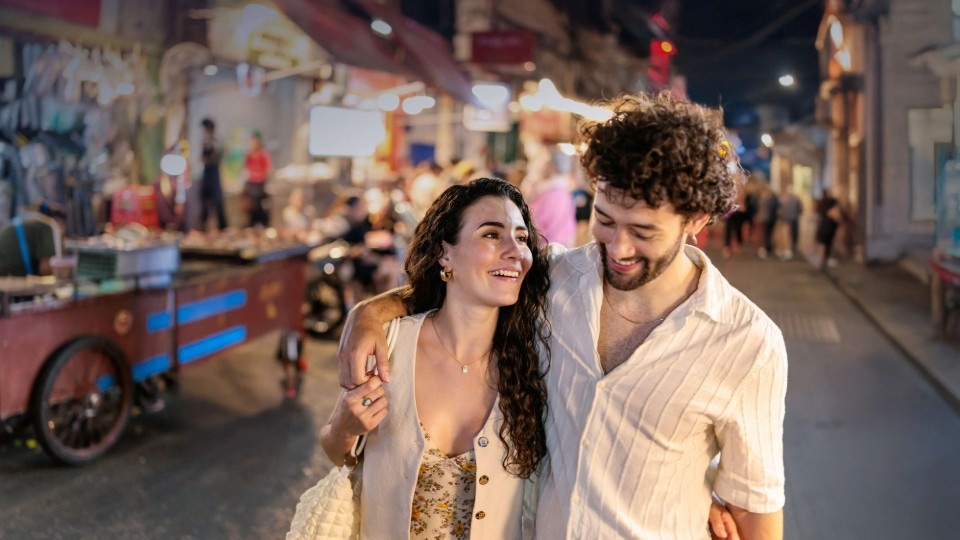
Prepaid credit cards are sometimes accepted in larger cities for cashless payments in shops, restaurants and hotels.
In larger cities, particularly Phnom Penh and Siem Reap, ATMs generally allow users to choose between local currency and US dollars. Withdrawing USD is recommended, as cash in US dollars is regarded as the main means of payment in tourist areas.
When travelling outside larger cities, it is advisable to carry sufficient cash reserves.
Small denominations are generally more readily accepted than large notes.
We recommend carrying cash in US dollars (USD).
Please note that cash in US dollars is regarded as the main means of payment in tourist areas. The local currency is less commonly used and in some cases is not accepted as a means of payment.
 Time difference from Switzerland
+ 6 h / + 5 h during our summer time
 Capital
Phnom Penh
 National language
Khmer
 Voltage
 Opening hours
Banks
8.00 am - 4.00 pm (Mon - Fri)
Shops
8.00/9.00 am - 9.00/10.00 pm (Mon - Fri)
 Public holidays
 Entry requirements
The following documents are required to enter Cambodia:
From 1 January 2025, Cambodia’s electronic arrival card will come into effect and all travellers will be required to complete the relevant electronic form.
The Cambodian immigration authorities operate the online registration app "Foreigners Present in Cambodia System" (FPCS). Without registration, a visa extension may be refused. In hotels, guesthouses or rented accommodation, the manager or landlord should complete the registration via the app.
Minors: Check with the local authorities regarding entry formalities for minors.
As of: November 2024
 Climate
Cambodia has a tropical monsoon climate that varies by region and season:
Best time to travel to Cambodia:
 Communications
Tourist attractions
 Food and drink
Cambodian cuisine is a harmonious blend of fresh ingredients, local specialities and influences from Thailand and Vietnam. From street-food stalls to upmarket restaurants, visitors can look forward to a true feast of flavours.
 Etiquette tips
Greetings: in Cambodia, the traditional greeting is the “Sampeah”, where the hands are placed together in front of the chest and the head is slightly bowed. The higher the hands are held, the more respectful the gesture. A simple smile is also always appreciated.
Saying please and thank you: friendliness and politeness are very important. A simple “Akun” (thank you) shows respect and is always appreciated. “Som” is used for “please”.
Clothing: shoulders and knees should be covered when visiting temples and religious sites. Modest, non-revealing clothing is also appreciated outside religious places.
Dining etiquette: it is polite to wait until the host or eldest person begins eating. Meals are often eaten with a spoon and fork, while knives are less commonly used. Food is frequently shared, and it is considered polite to take a small portion onto your plate.
Smoking: smoking is not permitted in enclosed spaces such as restaurants or temples. It is considered impolite to smoke without asking for permission first.
Tipping: tipping is not expected, but it is common in tourist areas. In restaurants or hotels, a tip of around 10% is appropriate. For smaller services, a small gesture is always appreciated.
 Health situation
Medical care
 Current security situation
Further information on the current security situation is available on the website of the Federal Department of Foreign Affairs (FDFA).
As of: November 2024
 Road traffic
Driving in Cambodia can be dangerous, as traffic regulations are often disregarded and road conditions are poor in many regions.
 Public transport
 in Cambodia is less developed, but it still offers travellers several ways to explore the country.
Long-distance trains: Cambodia’s railway network consists of two main lines: the Northern Line and the Southern Line, with a total length of around 650 kilometres. The Southern Line connects Phnom Penh with Sihanoukville, while the Northern Line links Phnom Penh with the Thai border. Train services are slow and irregular, but offer an interesting way to experience the landscape.
Regional trains: Regional rail services are limited and generally irregular, as freight traffic takes priority. For shorter journeys, travellers usually rely on buses.
Coaches: Coaches are the main form of public transport in Cambodia, particularly for longer journeys between cities such as Phnom Penh, Siem Reap and Sihanoukville. Various private operators offer services in different comfort classes. Long-distance coaches are often cheaper than trains and may offer amenities such as air conditioning and reclining seats.
Underground: Cambodia does not have an underground system.
 Air traffic
There are currently no direct flights from Switzerland to Cambodia. Travellers generally need to connect via major hubs such as Bangkok, Singapore or Hong Kong to reach Phnom Penh or Siem Reap.
The main airports in Cambodia are:
Cambodia’s main domestic airlines are Cambodia Angkor Air and Lanmei Airlines. International airlines such as Thai Airways, Singapore Airlines, Bangkok Airways and AirAsia connect Cambodia with destinations across Asia and beyond.
 Dialling code for calling Switzerland
00 41 (omit the initial zero of the Swiss area code)
 Emergency numbers
 Swiss Embassy / Consulate
# 50, Street 334, Boeung Keng Kang 1 / Khan Boeung Keng Kang
120102 Phnom Penh
Tel.: +855 23 218 305
Email: phnompenh.ca@eda.admin.ch
 Other information
Travel is the secure prepaid card for use away from home – without any annual fees. In the event of loss, the card including the balance will be replaced worldwide.
Find out more about TravelWhile every precaution has been taken to verify the information provided, Swiss Bankers Prepaid Services Ltd does not guarantee the accuracy or completeness of Country Information. Swiss Bankers therefore shall not be held liable for any damage or loss sustained in connection with any errors or omissions contained therein.

© Swiss Bankers 2026


