


Important information:
Am 10. April 2024 wurden das Kundenportal sowie der Web-Zugriff auf das Kartenkonto eingestellt. Bitte laden Sie die Swiss Bankers App herunter, um weiterhin uneingeschränkten Zugriff auf alle Dienste zu haben.
Are you a Swiss Bankers sales partner?
Hier geht es zum Partnerportal.
An espresso at the bar, a souvenir from the market or your first taxi ride after landing: when travelling, making payments quickly becomes a matter of being properly prepared. Which card is best, when do you need cash, and which currency should you select at the terminal? We’ll show you what matters when it comes to paying and withdrawing money abroad, and how to avoid unnecessary costs without losing flexibility whilst travelling.
 19.10.2026
 Eliza
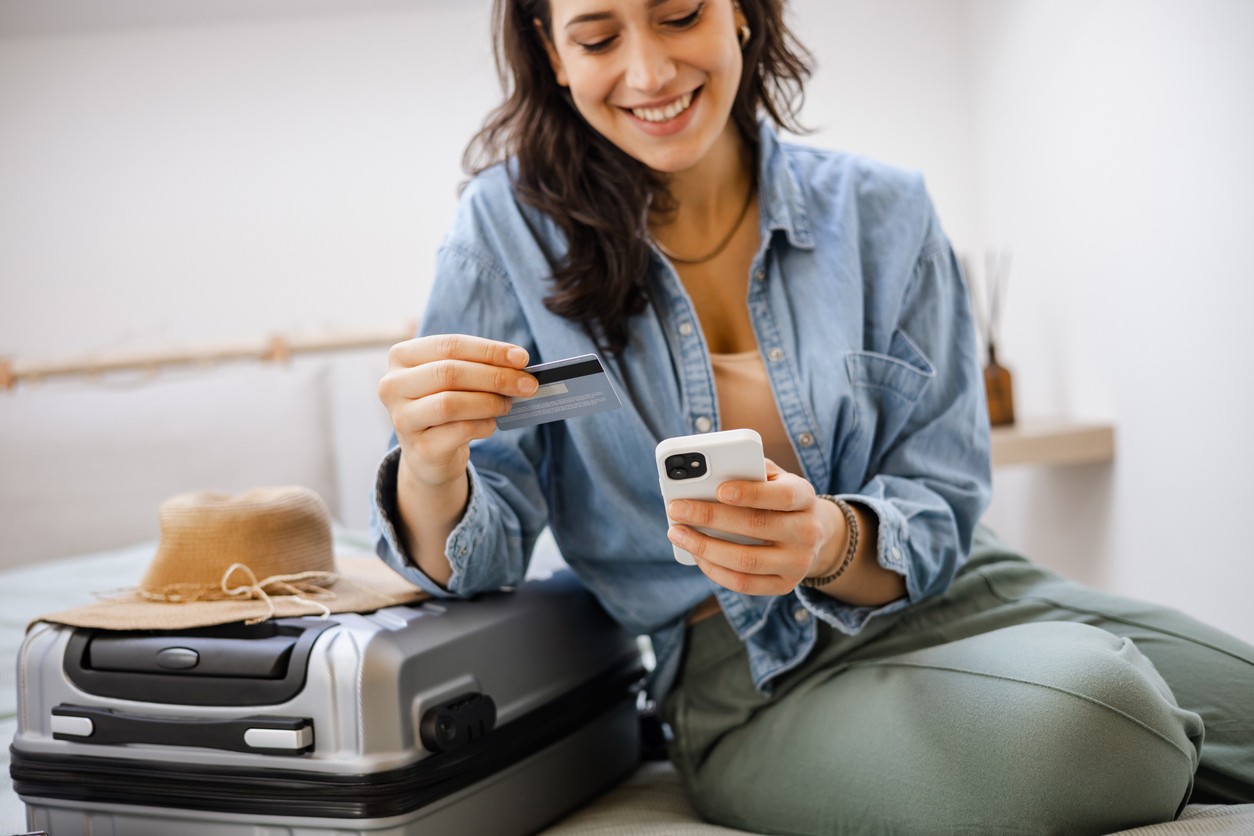
A weekend in Copenhagen places different demands on your travel budget than a round trip through rural regions of Peru. You should therefore find out in advance about the payment options available at your destination. You can find information on this in the country guides published by Swiss Bankers.
There are various options available whilst you’re on the move:
Prepaid card: You top up the card in advance and use the balance to pay for your expenses. This allows you to set your own travel budget. One example is the Swiss Bankers Travel Card, which uses the global Mastercard network.
Debit card: Purchases and cash withdrawals are debited directly from your linked bank account. You use the available balance within the agreed limits.
Credit card: You are usually billed later. Depending on the product, a credit limit is available, which can also be useful for larger purchases or bookings.
Cash: Banknotes and coins in the local currency are handy for small shops, markets or tips – and wherever card payments aren’t accepted.
Mobile payment: Using Apple Pay or Google Pay, you can pay with a supported card stored in the digital wallet on your smartphone or smartwatch. This means you have a payment option to hand even without your wallet.
Choose the combination that suits your travel plans. Having an additional payment method as a backup is helpful in case your preferred option doesn’t work whilst you’re travelling.
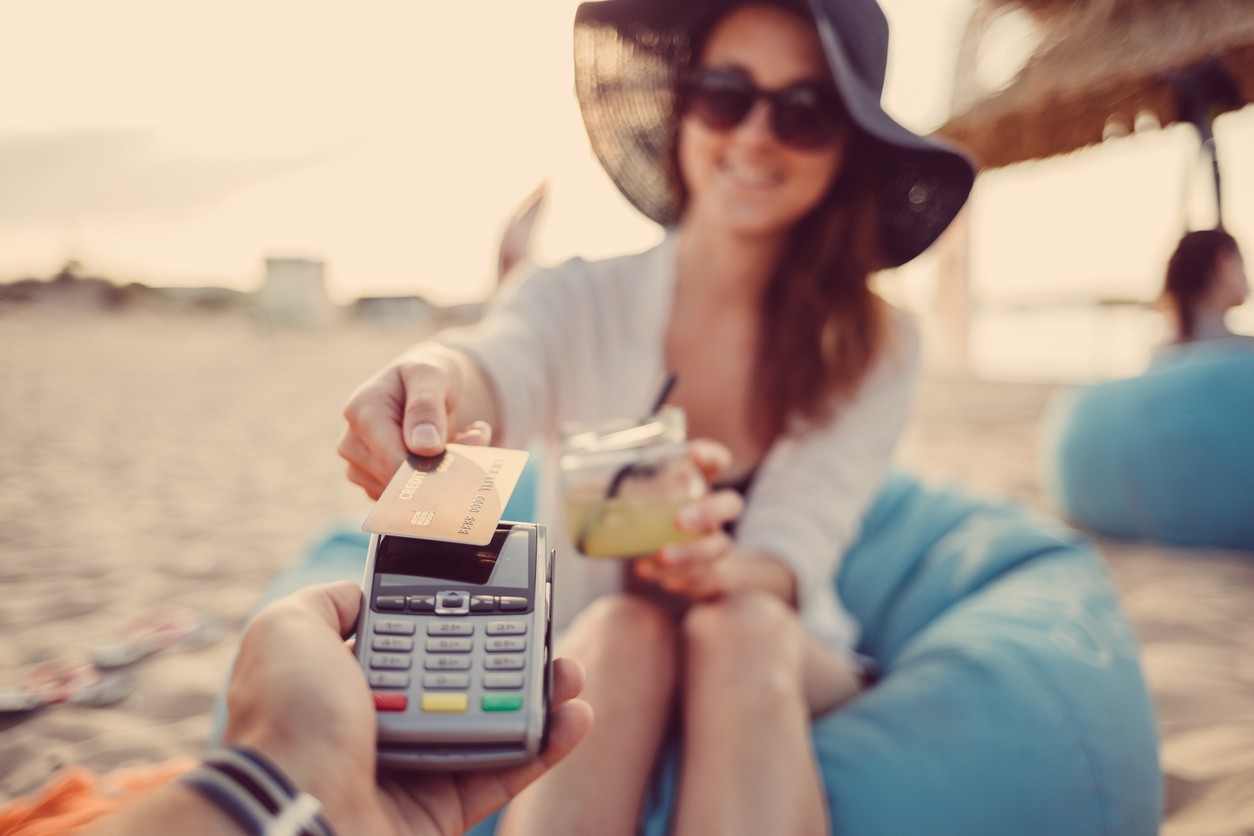
From shopping at the supermarket to buying museum tickets: paying by card is convenient, as you don’t have to count out the exact change or get hold of cash in the local currency beforehand. Where cards are widely accepted, they are therefore well suited as your main means of payment whilst travelling. To ensure that paying whilst on the move remains hassle-free, it’s worth taking a look at acceptance, costs and any special conditions.
Checking the logos at the till helps: Mastercard, Visa or American Express indicate which card brands are accepted. Compare these with the logo on your card – regardless of whether you’re using a debit, credit or prepaid card. The Swiss Bankers Travel Card uses the Mastercard network. So, when using it, look out for the Mastercard logo.
With Apple Pay or Google Pay, you can also make contactless payments whilst travelling, provided your linked card supports this feature and is accepted locally. You’ll usually get a good sense of how well mobile payments work at your destination within the first few days. As a precaution, do take your physical card with you anyway. That way, you’ll have an alternative if you can’t pay by smartphone at a till.
Depending on the card, there may be fixed fees per purchase or percentage-based surcharges. For foreign currencies, you’ll also need to factor in conversion charges. With the Swiss Bankers Travel Card, a fee of CHF/EUR/USD 1 is charged per purchase, depending on the card’s currency. Payments in other currencies are converted at the Mastercard exchange rate.
Standard credit cards with a credit limit, such as Visa or Mastercard, are usually accepted for deposits. Prepaid cards are often excluded; for debit cards, conditions vary depending on the provider. Check in advance whether your card is accepted and allow for a sufficient financial buffer to cover the deposit.
Once card acceptance and terms have been clarified, many everyday travel expenses can be conveniently paid for cashlessly. At the payment terminal, you may then face another decision: choosing between the local currency and Swiss francs.
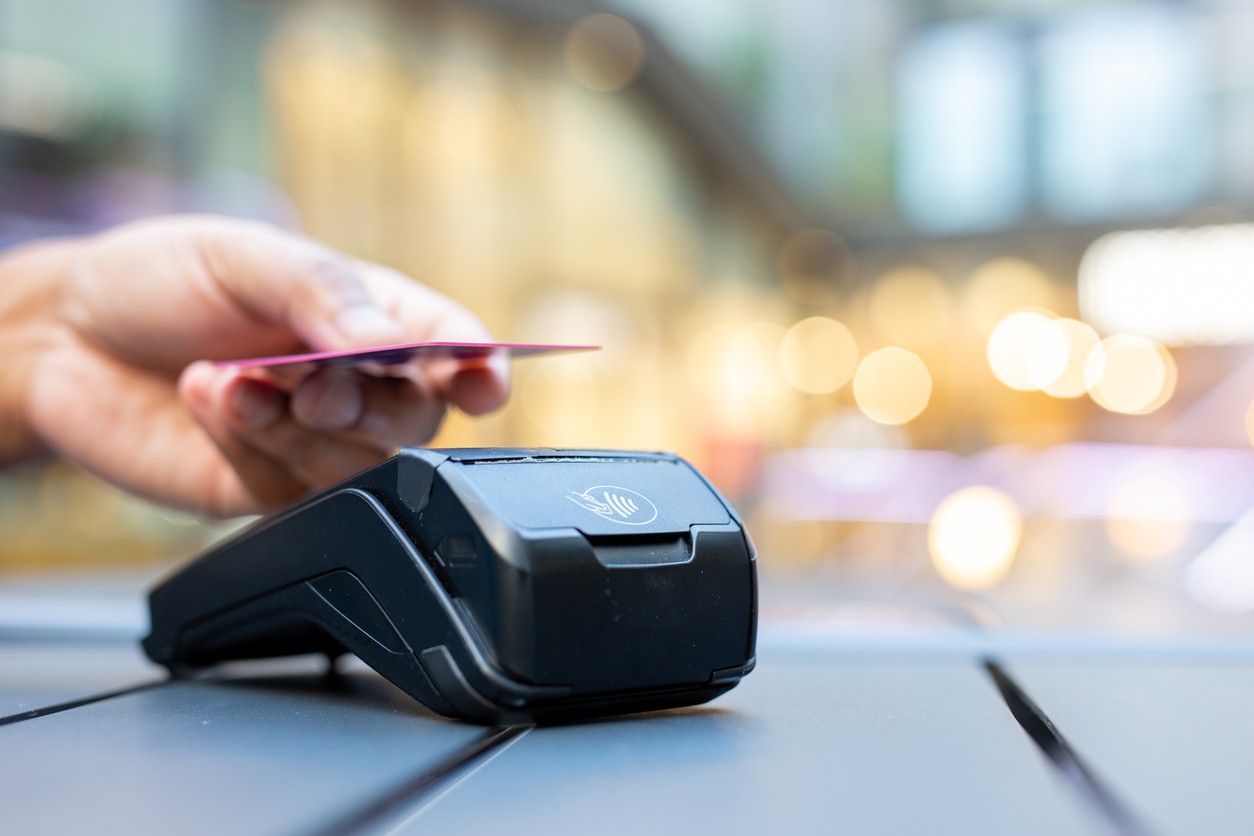
After dinner in Italy, when paying by card, the terminal may offer you two options: payment in euros or in Swiss francs. The familiar currency seems convenient because the amount in francs is immediately clear. However, this often involves dynamic currency conversion, also known as DCC.
This conversion is offered by the merchant or their payment service provider. The amount displayed may include additional surcharges and could work out less favourably than the conversion carried out by your card provider.
You should therefore select the local currency when given the usual choice between the local currency and Swiss francs: the euro in Italy, the baht in Thailand and the rand in South Africa. This applies to both making payments and withdrawing cash.
At an ATM, the relevant option may be labelled, for example, ‘no conversion’ or ‘Decline conversion’. The wording may vary. You should therefore read the display carefully. By selecting this option, you are declining the instant conversion offered; the transaction can still go ahead. Fees charged by your card issuer and the ATM operator may still apply.
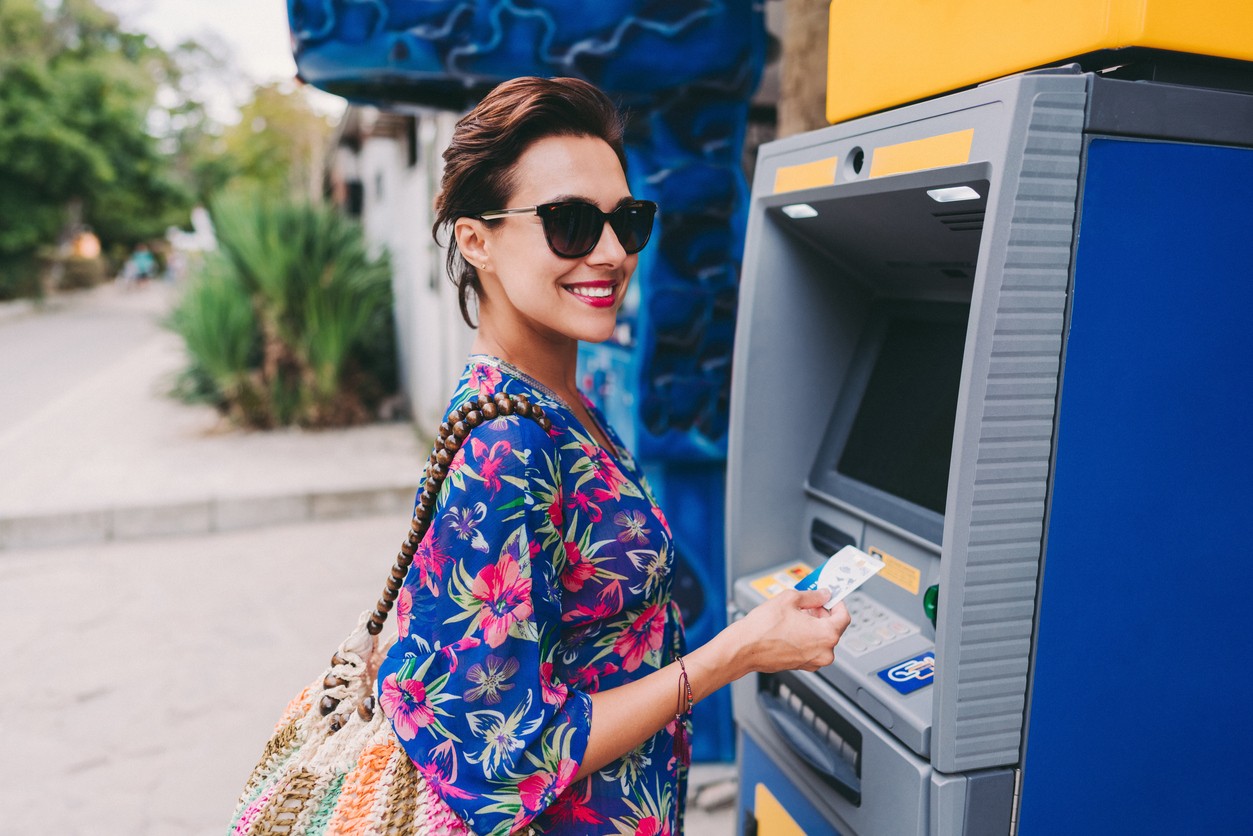
At the weekly market, in the bakery or in a café: cash can be particularly handy for small purchases – and wherever card payments aren’t accepted. These tips will help you find a suitable cash machine and keep track of the costs:
Check acceptance and limits: Look out for your card’s logo on the cash machine. For the Swiss Bankers Travel Card, this is the Mastercard logo. You can find suitable machines using the Swiss Bankers ATM Locator. Also, be aware of the withdrawal limits for your card and the cash machine.
Be aware of the card issuer’s fees: Depending on the card, fees may be fixed amounts, percentage-based charges or a combination with a minimum fee. With the Swiss Bankers Travel Card, a cash withdrawal abroad costs 2 per cent of the amount, with a minimum of CHF/EUR/USD 7.50, depending on the card’s currency. You can find details in the fees overview.
Be aware of possible operator fees: Depending on the country and the ATM operator, an additional fee may apply. If such a surcharge is displayed on the screen, you can cancel the withdrawal before confirming and choose another ATM.
Choose to be charged in the local currency: If the ATM offers an instant conversion into Swiss francs, select the local currency or ‘no conversion’. This will help you avoid any potential surcharges resulting from the instant conversion offered.
Estimate your cash requirements realistically: Base your decision on your needs for the next few days. If there is a minimum fee, a few well-planned withdrawals may work out cheaper than many small ones. Nevertheless, only withdraw as much as you are likely to need.
For further practical advice on how to spot common cost traps when withdrawing cash and plan your withdrawals sensibly whilst travelling, see the article ‘Cash withdrawals: 5 tips to avoid unnecessary fees’.

There are a few things you can sort out at home at your leisure. That way, you won’t have to worry about a forgotten PIN or insufficient funds whilst you’re away:
Set your budget and spending limits: Think about how much you’ll need for shopping, excursions and cash withdrawals. Check your card’s validity and spending limits, and allow for a buffer to cover any deposits. You can top up a prepaid card in advance with your planned travel budget – with the Swiss Bankers Travel Card, for example, you can do this conveniently via the Swiss Bankers app.
Keep your PIN to hand: Do you know the PINs for your debit, credit and prepaid cards? You may be asked to enter your PIN even for contactless payments. You’ll also need your PIN for cash withdrawals.
Check the app and card settings: Test access to the app and check that your card settings allow you to use it at your destination. With the Swiss Bankers app, for example, you can view your balance and transactions, change your PIN and block your card if it’s lost. By the way: if your Swiss Bankers Travel Card is lost or stolen, it will be replaced free of charge worldwide, including any remaining balance.
Pack a second card: An extra card comes in handy if your preferred card is declined or goes missing. Keep the spare card separate from the one you use most often.
Get some local currency ready: A cash reserve can be handy for initial expenses after arrival. You can exchange money before you leave or, if you have an active Swiss Bankers card, use the Swiss Bankers cash order service in the app. The banknotes will be delivered to your registered home address in Switzerland. Allow plenty of time for delivery.
With these preparations in place, your travel funds are all set – both for your initial expenses upon arrival and for any spontaneous plans whilst travelling.
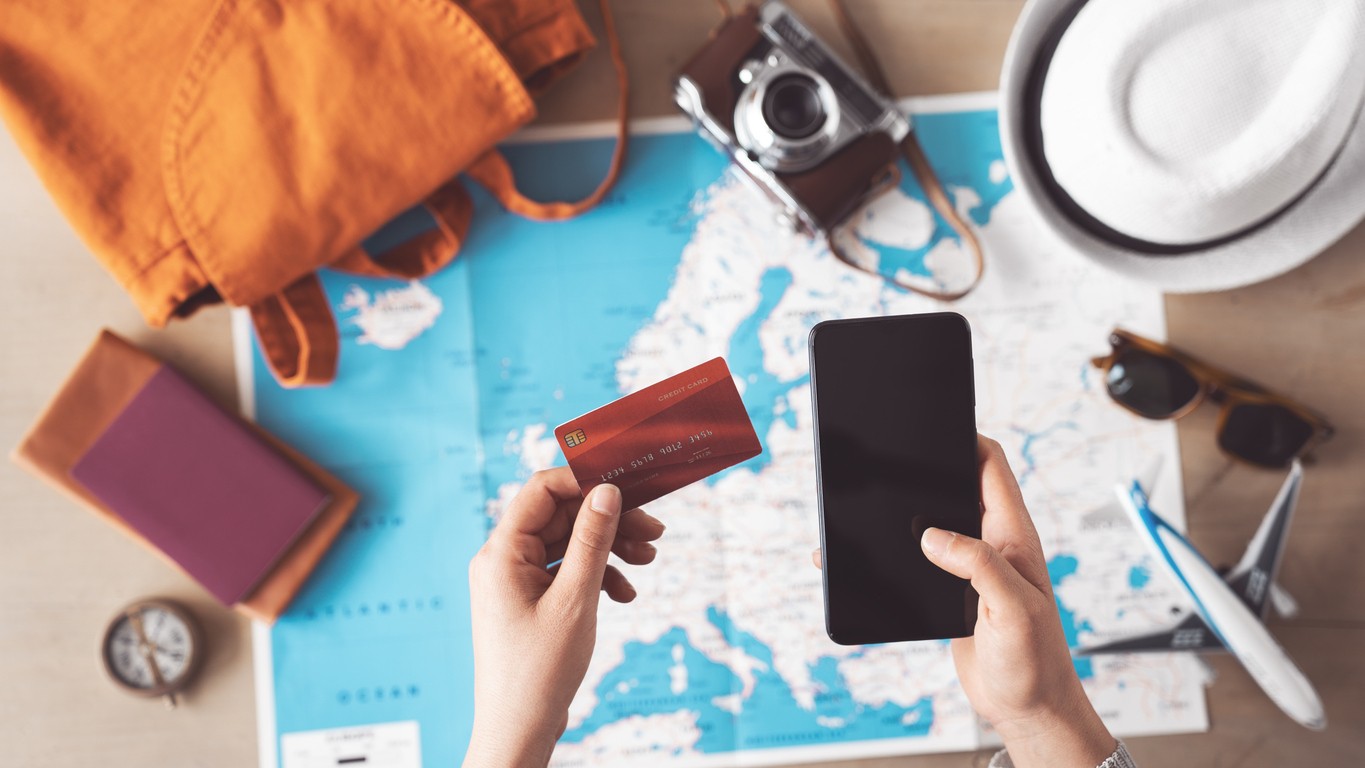
What charges might apply when withdrawing cash, and what should you do if your card doesn’t work? Here we answer frequently asked questions about making payments and withdrawing cash abroad – so that you’re well prepared when travelling.
That depends on your card and your spending habits. Compare the fees per transaction with the costs of your planned cash withdrawals. With the Swiss Bankers Travel Card, for example, a fee of CHF/EUR/USD 1 applies per transaction, depending on the card’s currency. This is why it’s worth taking a close look at the total costs, particularly if you’re making lots of small payments.
The amount you can withdraw depends on the withdrawal limits set for your card and the specific cash machine, as well as your available balance or credit limit. A cash machine may limit the amount per withdrawal, even if your card would allow a higher amount.
Depending on the card, a fixed amount, a percentage or a combination with a minimum fee is charged. With the Swiss Bankers Travel Card, for example, a cash withdrawal abroad costs 2 per cent of the amount, with a minimum of CHF/EUR/USD 7.50, depending on the card’s currency. Additional fees charged by the ATM operator may apply. Where different currencies are involved, the exchange rate applied is also relevant.
It’s handy to have some local currency in your luggage for initial expenses after arrival. You can arrange this, for example, via the Swiss Bankers cash order service: with an active Swiss Bankers card, you can order banknotes via the app and have them delivered to your registered home address in Switzerland. Orders can be placed for amounts equivalent to CHF 200 or more, plus fees. You can withdraw further cash locally later if required.
Possible reasons include the card not being accepted, insufficient funds, spending limits being reached, regional restrictions or technical issues. First, check your available balance and card settings. If you have a Swiss Bankers card, you can use the Swiss Bankers app for this. If the reason remains unclear, your card provider will be able to help.
Make a note of the location and operator of the ATM, the time and the amount, and keep any receipts you have. Check whether the amount has only been reserved or has already been debited. Report the incident to your card provider as soon as possible so that the transaction can be investigated and, if necessary, disputed.
Conclusion: The right combination of cards and cash makes travelling easier. If you check the terms and conditions in advance, select the local currency at the terminal and have an alternative payment method to hand, you can get back to enjoying what travelling is all about whilst on the move.

© Swiss Bankers 2026


