


Important information:
Am 10. April 2024 wurden das Kundenportal sowie der Web-Zugriff auf das Kartenkonto eingestellt. Bitte laden Sie die Swiss Bankers App herunter, um weiterhin uneingeschränkten Zugriff auf alle Dienste zu haben.
Are you a Swiss Bankers sales partner?
Hier geht es zum Partnerportal.
Spain offers a wide variety of beach holidays: rugged Atlantic coastlines in the north, unspoilt stretches along the Costa Brava and turquoise bays in the Balearic Islands – plus the Canary Islands with their very own unique landscape. In this article, you’ll find our top 10 most beautiful beaches in Spain, deliberately selected from both the mainland and the islands. Each beach is accompanied by a brief description and a tip, so you can quickly see which ones suit your holiday plans.
 21.02.2026
 Miryana
Contents:
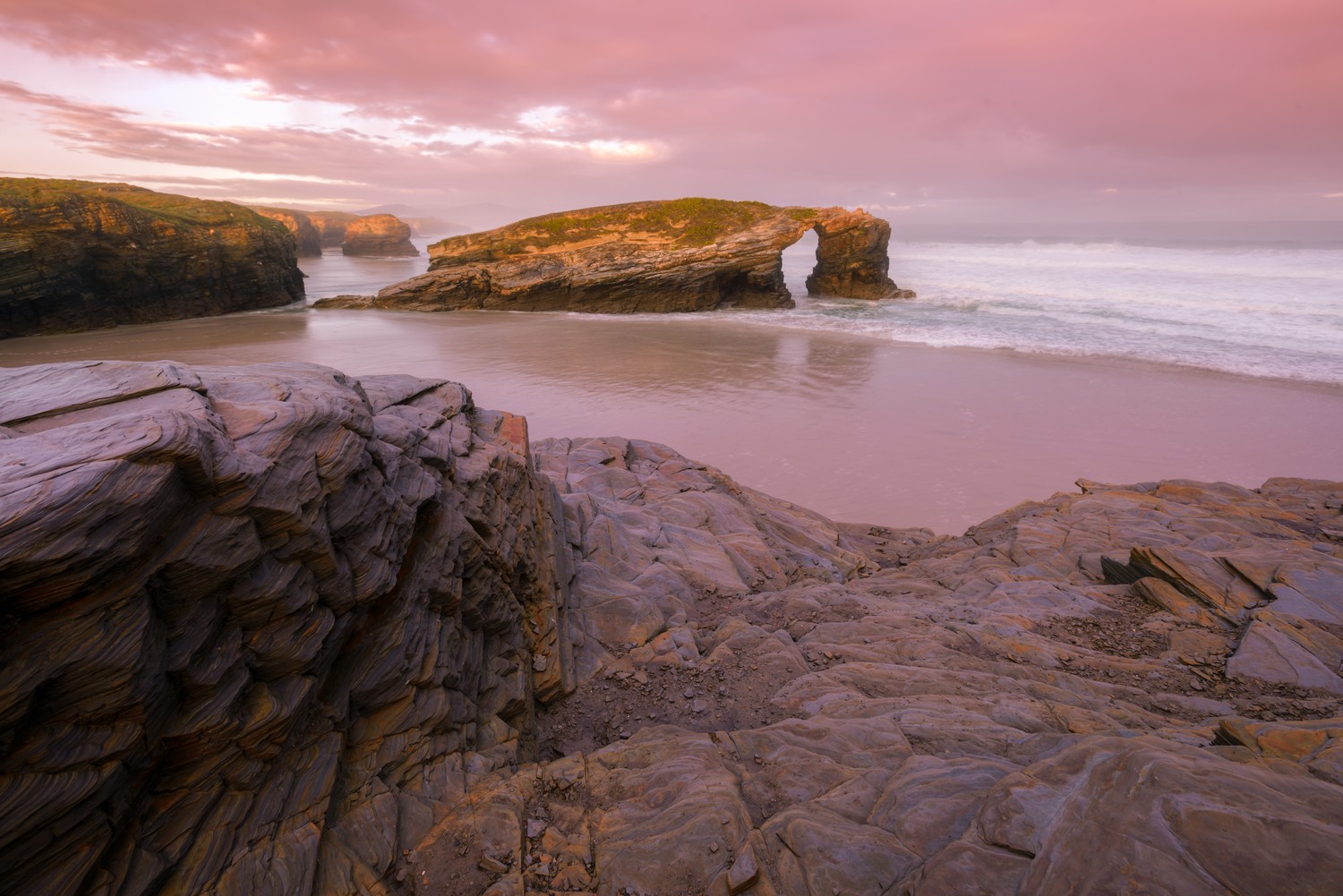
Photo: A sunrise in shades of purple at the famous Praia das Catedrais.
Praia das Catedrais is one of the best-known beaches in northern Spain – not for ‘sun and sea’, but for the huge rock arches, caves and natural passageways that become accessible at low tide. This is precisely why your visit depends entirely on the tides: at high tide, you’ll mainly see the cliff face, whilst at low tide the beach becomes the real attraction. Allow a bit of extra time, as depending on the section, you’ll be walking across sand and, in places, slippery rock slabs – sturdy footwear makes all the difference.
Tip: Check the tide times in advance and ideally arrive 60–90 minutes before low tide. That way, you’ll have plenty of time to explore the formations at your leisure before the water rises again.
Playa de la Concha is a classic in San Sebastián – a city beach that doesn’t feel like ‘just a quick dip’. The bay is crescent-shaped and therefore often relatively quiet, making it ideal if you fancy a leisurely swim or simply want to take a long stroll along the water’s edge. Added to this is the promenade right behind the beach: in just a few minutes you’re at cafés, restaurants and in the old town – perfect if you want to combine beach time and city sightseeing with ease. La Concha is therefore a particularly rewarding ‘fixed point’ for a one- or two-day stay in San Sebastián: a quick dip in the sea in the morning, exploring the city during the day, and dinner in the evening – without any transfers or detours.
Tip: Head to the beach early in the morning or later in the afternoon. It’s noticeably quieter then, the light is more pleasant (also for photos), and you’ll find a relaxing spot more easily, without it feeling like the hustle and bustle of peak season.
Video: Platja de Castell: pine trees, sand and clear water.
Platja de Castell is a brilliant beach if you’re looking for somewhere on the Costa Brava that feels unspoilt and isn’t dominated by buildings. The beach is wide enough for a ‘full day by the sea’, whilst the surroundings remain pleasantly green – pine trees and a sheltered stretch of coastline ensure that it feels less touristy than many other spots in the region. To the north and south of the beach lie two stately homes – Marlene Dietrich and Salvador Dalí, amongst others, were guests there, which lends the place a touch of ‘Costa Brava legend’.
Tip: During the peak season, try to arrive before late morning if possible. That way, the journey there is more relaxed (parking) and you’ll have more choice when it comes to the quieter parts of the beach.
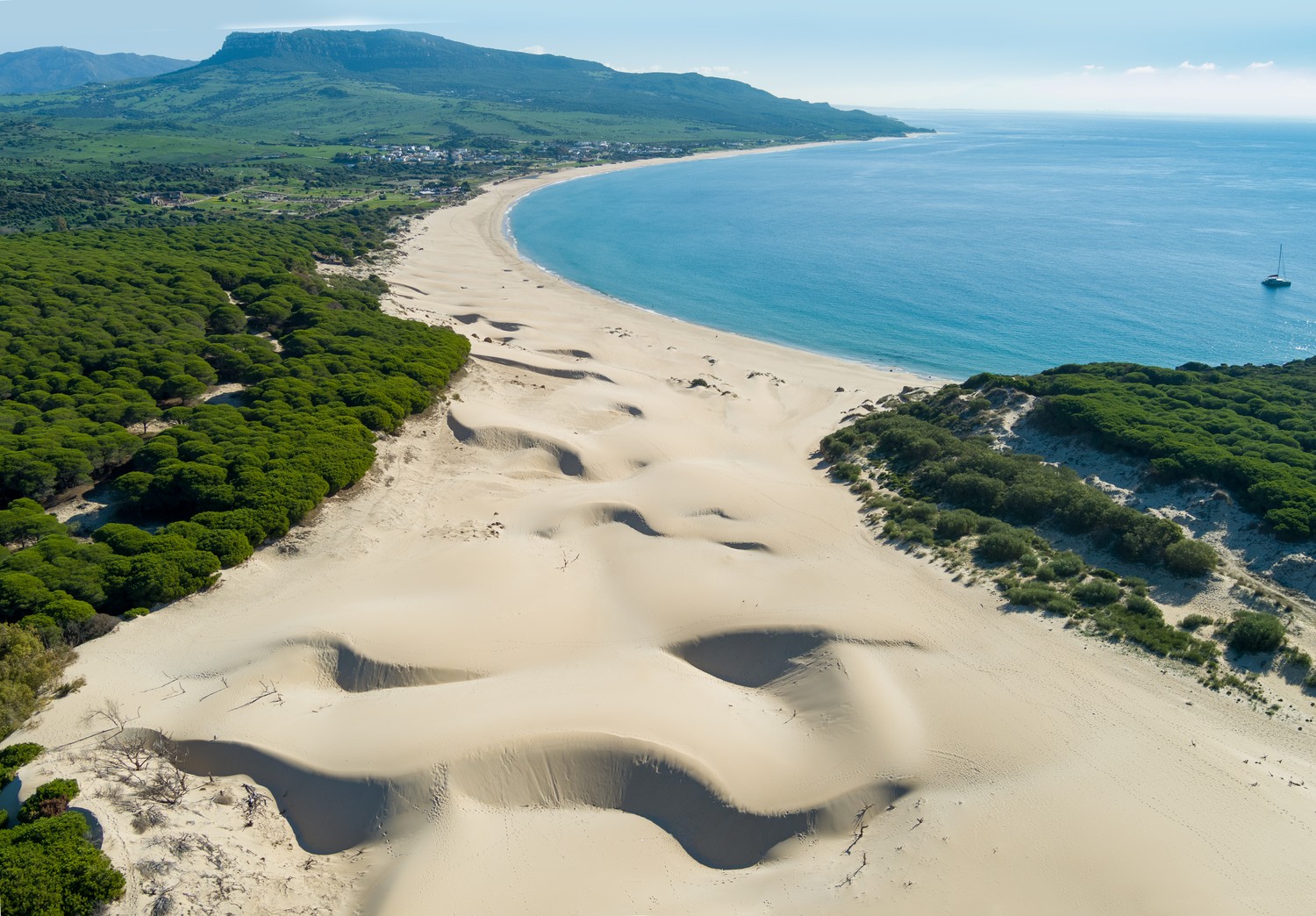
Photo: A bird’s-eye view of the dune landscape with its pine forest at Playa de Bolonia.
Playa de Bolonia is one of those beaches in Andalusia that still feels spacious and relaxed even when it’s busy. The beach is vast, with fine sand and a striking dune that makes the whole area feel like a small nature reserve. Thanks to its Atlantic location, the air is often pleasantly fresh, and the beach is ideal not only for swimming but also for long walks. If you fancy it, you can also combine your day at the beach with a short detour to explore the surrounding area – without it feeling like any extra effort.
Tip: If it’s windy (which is often the case here), find a spot sheltered by the dune or bring a lightweight windbreak with you. This will make your day at the beach much more enjoyable – especially if you’re lying there for a while or are out and about with children.
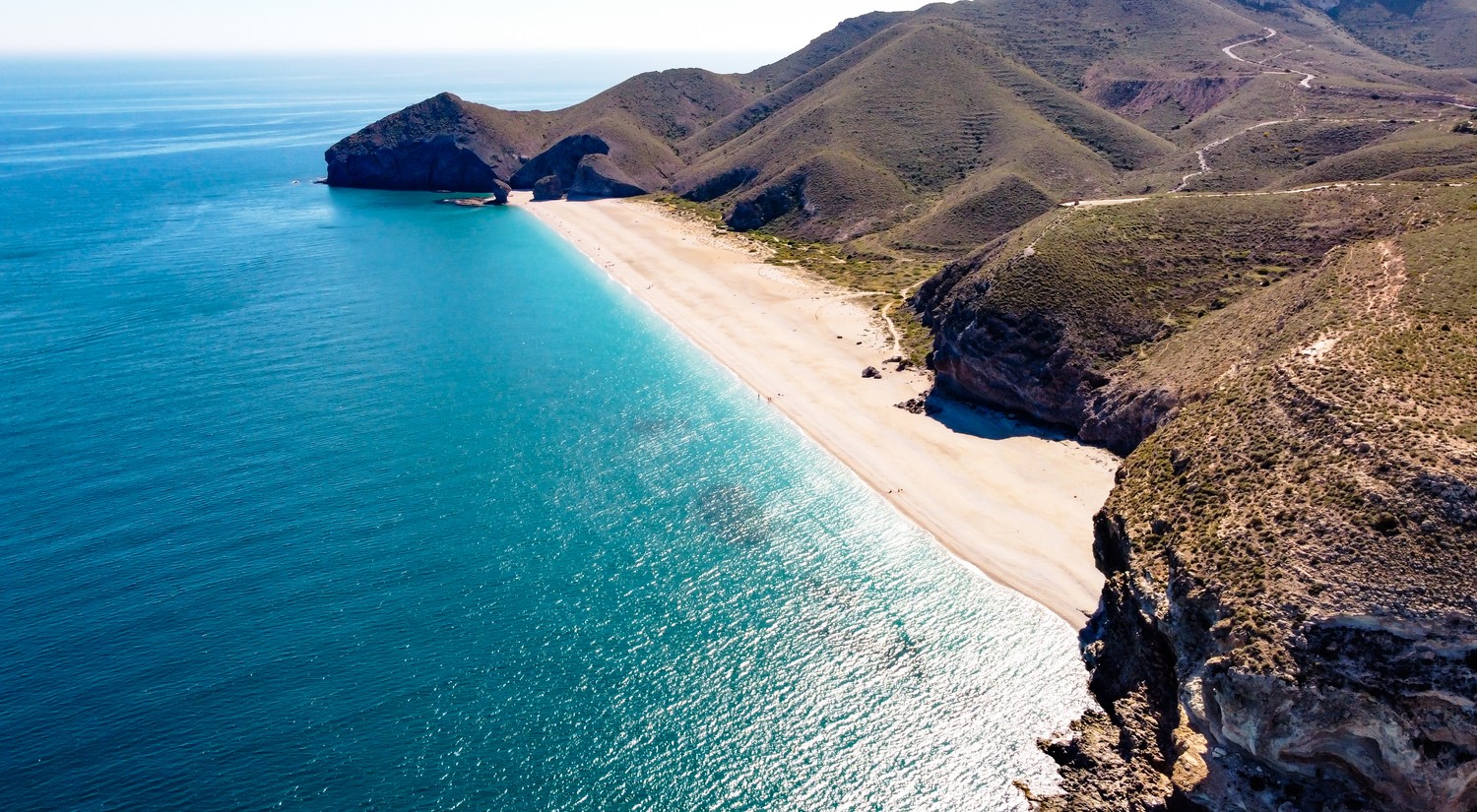
Photo: Playa de los Muertos: Crystal-clear water and a rugged rocky coastline near Almería.
Playa de los Muertos is one of the best-known coves on the Almería coast – mainly because of its crystal-clear water and the striking, arid rocky landscape surrounding it. The beach consists of stretches of light-coloured gravel and sand and, overall, has a much ‘wilder’ feel than traditional holiday beaches with a promenade. Important to bear in mind when planning your visit: you reach the cove via a steep footpath from the car park – the walk there is manageable, but the return journey can be tiring in the heat. It’s well worth the effort, though: once you reach the bottom, the cove often feels surprisingly secluded, and the colour of the water is truly impressive in the sunshine.
Tip: Take plenty of water with you and go – especially in summer – either early in the morning or later in the afternoon. Then it’s cooler on the walk, the beach is less crowded, and the light is much better for photos. And even though the water looks tempting: depending on the wind and swell, the currents and surf can be strong – you really should take the warning flags here seriously.
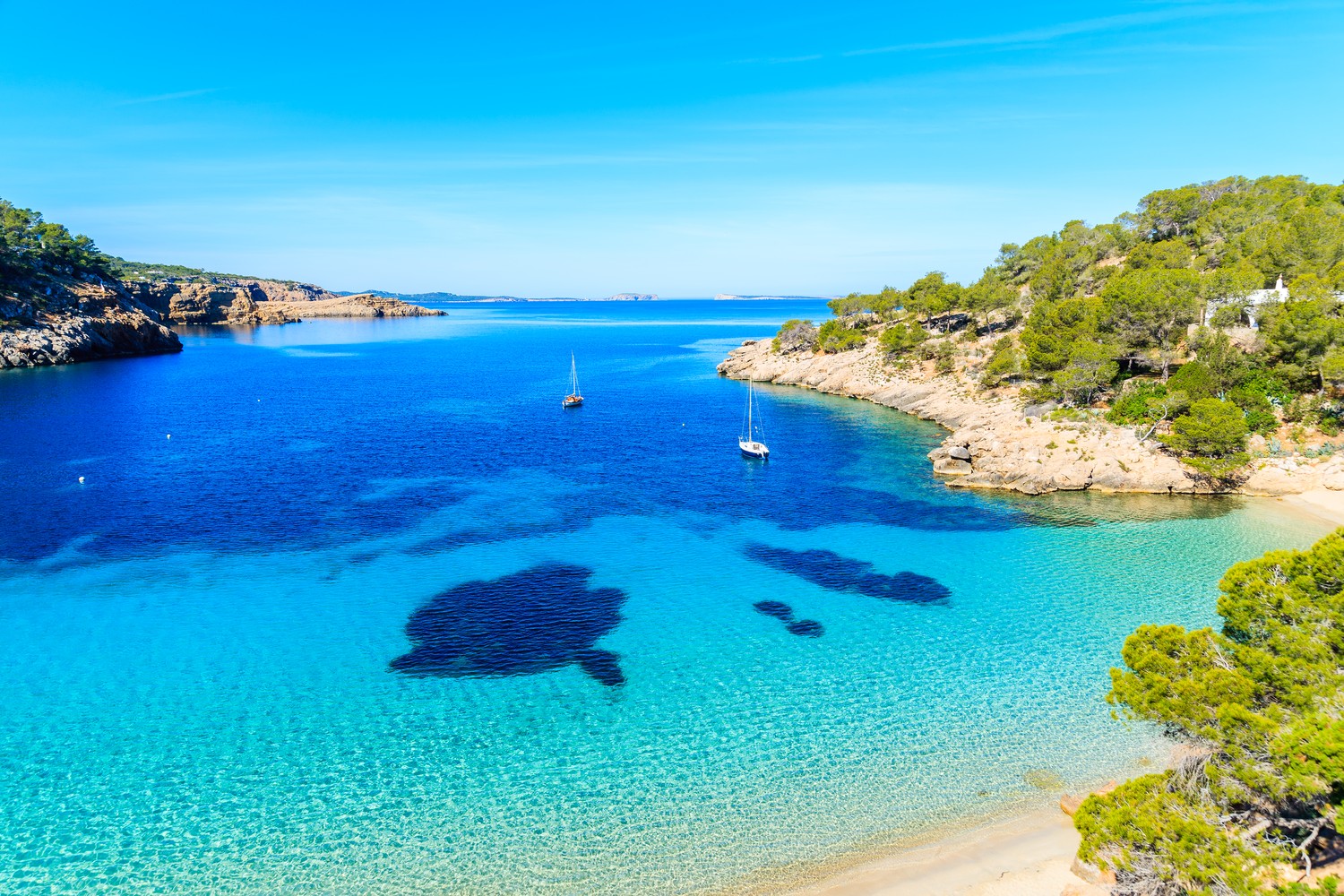
Photo: A view of the beautiful beach in Cala Salada Bay.
Cala Salada is one of the most popular coves in Ibiza – compact, surrounded by pine-covered slopes and with water that appears crystal-clear and turquoise in the sunshine. It is precisely this ‘cove profile’ that makes it so attractive: you quickly get the feeling of being in a sheltered cove rather than on an open stretch of beach. In high season, however, it gets crowded quickly and access may be restricted at times – so the cove is less of a ‘spontaneous stop’ and more of a beach that you need to plan for with a bit of timing. Conveniently, you can also reach Cala Saladeta nearby if you’re looking for a second, similarly beautiful spot.
Tip: Try to visit Cala Salada as early in the day as possible. The water is often calmer then, the atmosphere is much more relaxed – and you’ll usually avoid most of the stress of getting there and finding a parking space.
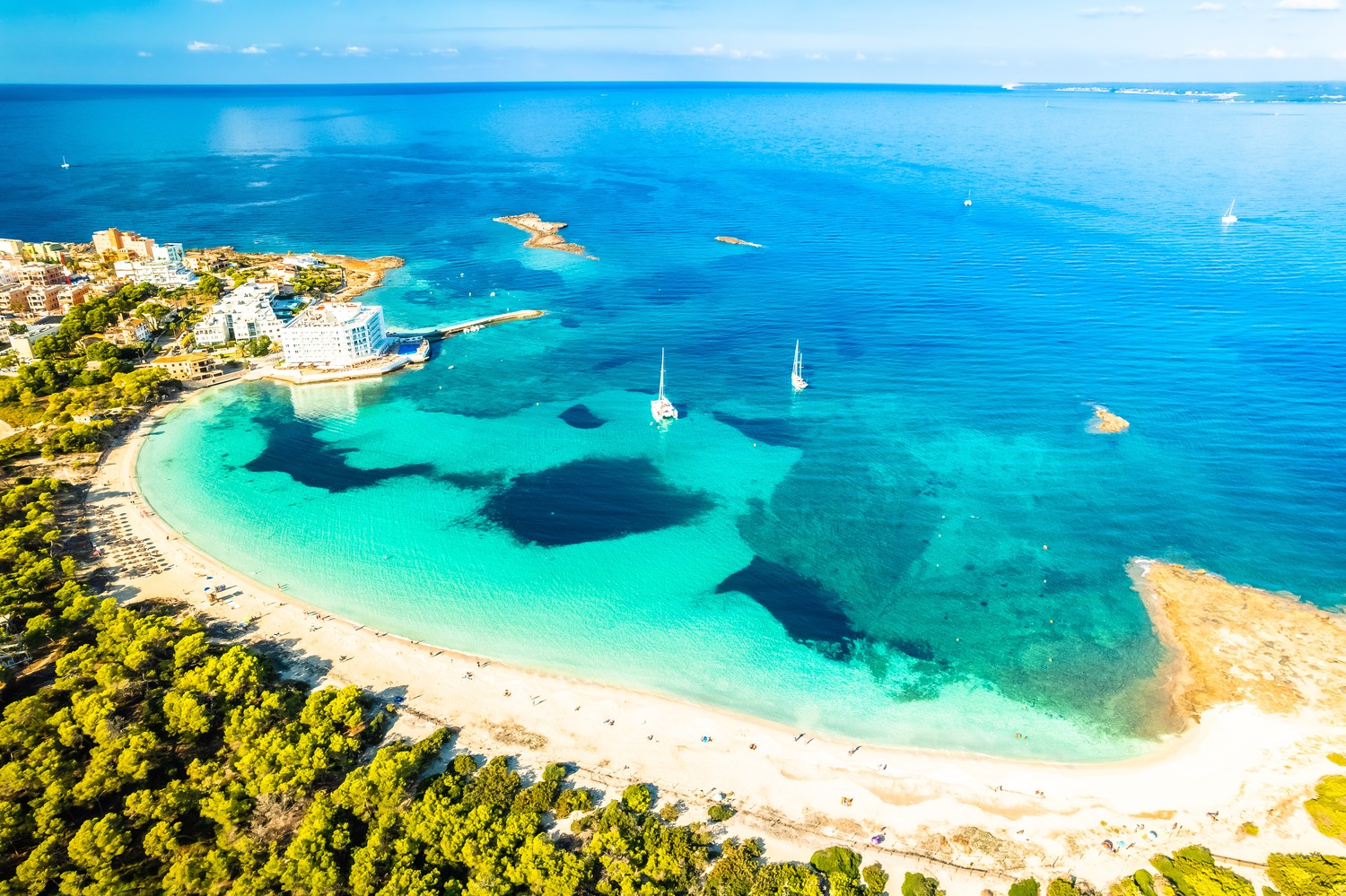
Photo: Aerial panoramic view of Es Trenc beach.
Es Trenc is one of Mallorca’s best-known beaches – and this is mainly down to the combination of its long, light-coloured sandy beach and water that often looks very clear in the sunshine. Unlike many small coves, Es Trenc is open and spacious: ideal if you like your space and are looking for a beach where you can easily spend several hours without it feeling cramped. Depending on where you choose to access the beach and park, the walk down to the water may be a little longer – but a few minutes’ walk will often take you to quieter sections.
Tip: If you prefer a more relaxed atmosphere, walk a short distance away from the main entrance upon arrival (10–15 minutes). This noticeably reduces the crowds and makes Es Trenc much more pleasant – especially in high season.
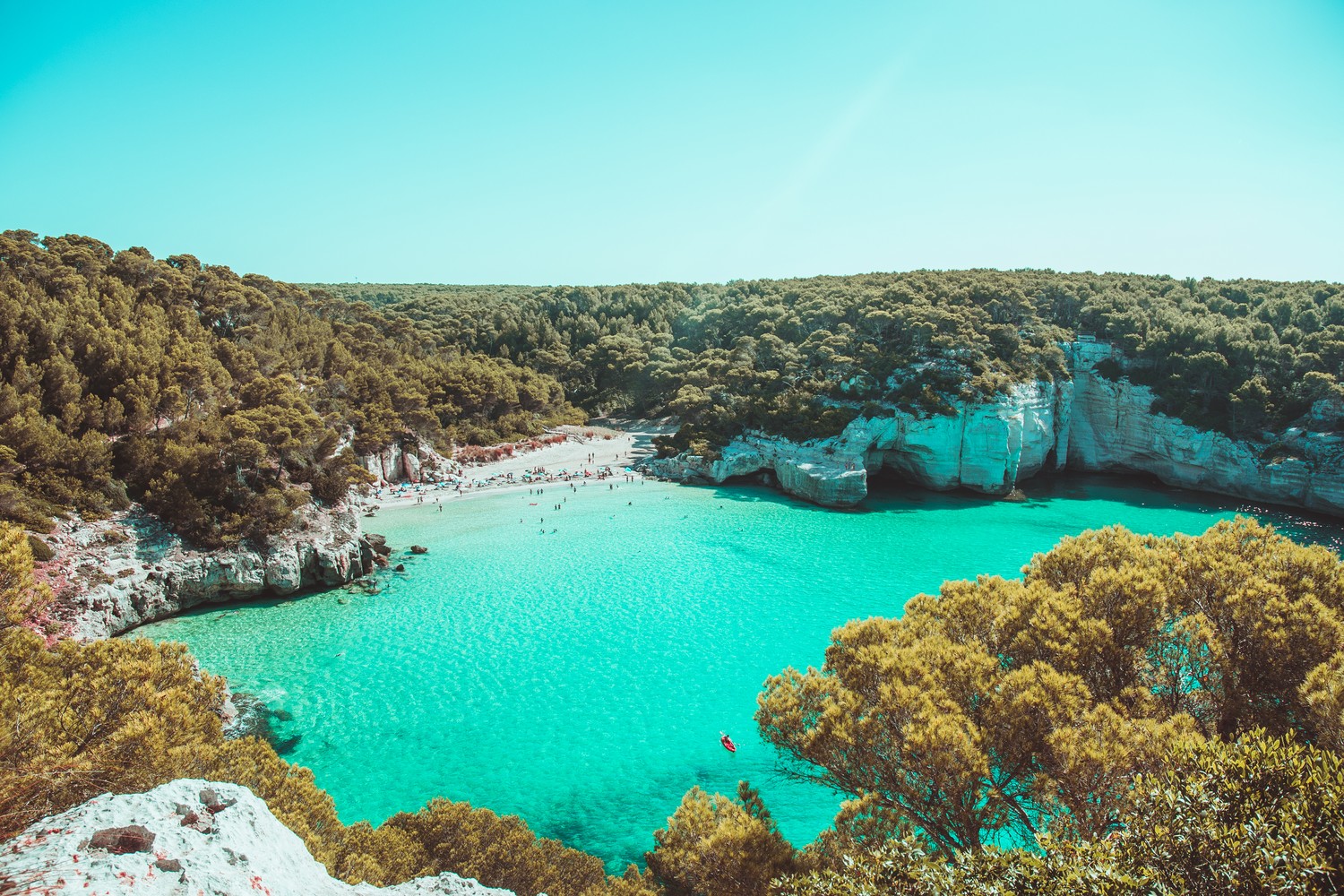
Photo: The stunning Cala Macarella on Menorca.
Cala Macarella is one of Menorca’s best-known beaches and is often held up as a prime example of what makes the island so popular: light-coloured sand, crystal-clear water and a sheltered cove framed by pine trees and rocks. This makes it particularly well suited for swimming and – depending on visibility – also for snorkelling along the edges. However, as the cove is relatively compact, you’ll quickly notice the crowds during the peak season. That’s exactly when it’s worth planning ahead: either set off early or time your visit so that you’re not there during the usual midday rush.
Tip: If Macarella is too crowded, take the short path to Cala Macarelleta. It’s often a bit quieter there, and you’ll get the same ‘Menorca vibe’ with less hustle and bustle.
Video: Platja de Llevant: Formentera’s long, unspoilt beach stretching out into the distance.
Platja de Llevant is an excellent choice on Formentera if you’re looking for a beach that’s wide, open and relatively quiet. It’s situated on the same headland as Ses Illetes, but often feels less ‘trendy’ and spreads visitors out more effectively because it stretches for a longer distance. This makes it ideal for anyone who, on holiday, isn’t looking for the perfect cove but rather a beach where you can swim, walk and simply spend time by the sea without any fuss. Due to its exposed location, it can be windier depending on the weather – but this gives the beach a very natural feel and offers plenty of space, even when it’s busier in high season.
Tip: When the wind and waves are stronger, it’s worth popping over to Ses Illetes: the other side of the headland is often calmer, depending on the weather. This way, you can flexibly choose the best stretch of beach for the day.
Video: Playa de Cofete: Endless expanses along Fuerteventura’s wild Atlantic coast.
Playa de Cofete is a real highlight, especially if you see a beach not just as a place to swim, but as a scenic experience in its own right. The beach is extremely long and lies in a secluded spot on the Jandía Peninsula – with mountains behind it and the open Atlantic in front. However, it is precisely this openness that is the key factor: Cofete is often windy, the waves can be strong and the currents should not be underestimated. For this reason, it is often better suited to walks, viewing points and photos than to a traditional day at the beach where you can spend long, carefree hours in the water. Facilities are minimal – so plan as if you were in a nature reserve, not at a typical holiday beach.
Tip: Head first to the mirador (viewpoint) above the beach and assess the wind and swell from there. That way, you’ll know straight away whether Cofete is more of a ‘beach walk’ spot that day or not worth visiting at all – and you’ll save yourself an unnecessary trip.
Whether it’s turquoise coves, long natural beaches or spectacular coastal formations – Spain offers an enormous variety. The key is getting the timing right: in the north, plan around the tides; in the Balearic Islands, set off early; and on Atlantic beaches such as Cofete, take the wind and currents seriously. That way, you’ll quickly find the beaches that really suit your holiday.

© Swiss Bankers 2026


